Published August 26, 2026
Why Palm Tree Trimming Before August Monsoon Winds Protects Phoenix Properties
Why Phoenix Metro homeowners and office managers should trim palms before August monsoon winds to reduce debris, hazards, cleanup, and property damage.
Palm trimming is storm preparation, not just cleanup
August monsoon storms can turn neglected palm fronds into a real property headache. For Phoenix Metro homeowners, HOAs, office managers, and commercial property managers, palm tree trimming before heavy wind and dust storms helps reduce falling debris, improve site safety, protect roofs and walkways, and keep landscapes looking maintained when weather gets rough.
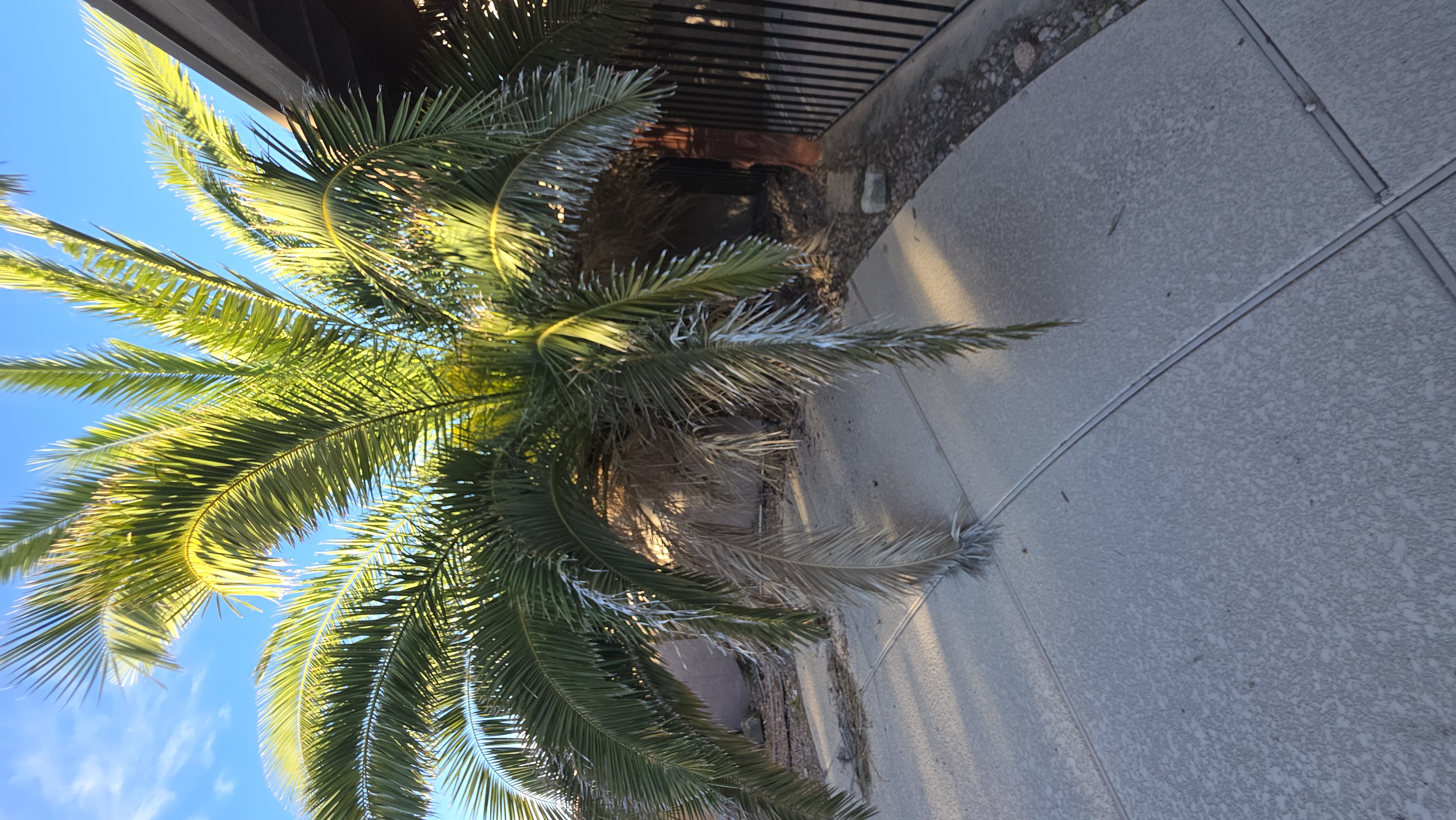
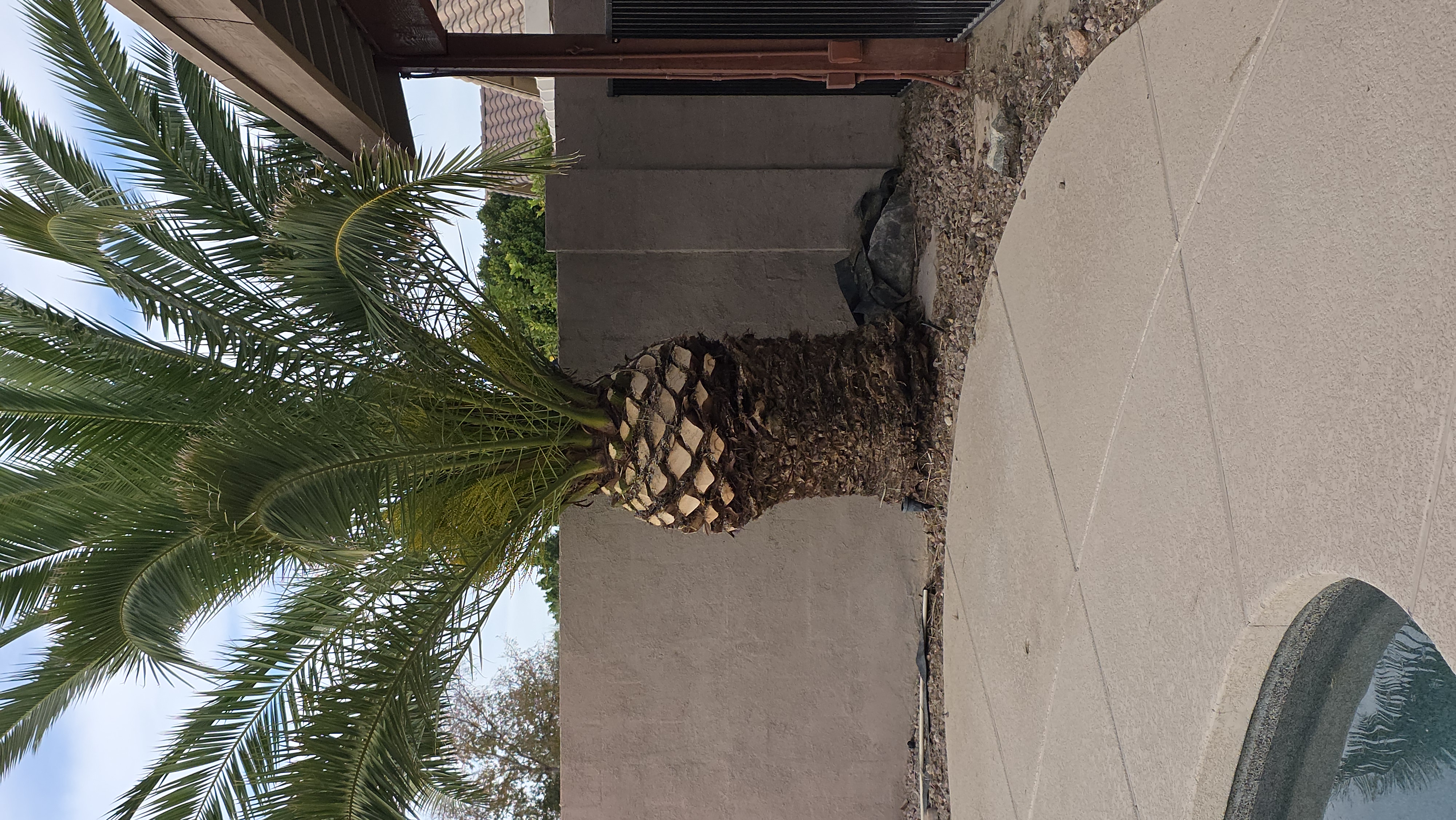
In Arizona, a palm that looks manageable in calm weather can become a problem during sudden wind gusts. Dead skirts, dry fronds, seed pods, and heavy hanging growth can break loose, scatter across parking lots, fall near entrances, clog pool areas, or create extra cleanup after a storm. A practical trimming visit removes the material most likely to become loose debris while keeping healthy green fronds that support the palm.
Why August matters for Phoenix Metro properties
Late summer brings stronger storm activity, dust, rain bursts, and high winds across Phoenix, Glendale, Peoria, Surprise, Scottsdale, Avondale, Goodyear, Tolleson, Laveen, El Mirage, Sun City, and Sun City West. Scheduling palm tree trimming before or during August gives property owners a chance to correct messy growth before the next storm exposes it.
For homeowners, that can mean fewer fronds falling near patios, driveways, pools, roofs, and block walls. For office managers and commercial properties, it can mean cleaner entrances, safer walkways, fewer tenant complaints, better curb appeal, and less emergency cleanup after windy weather.
What can happen when palms are left too heavy
Untrimmed palms may collect dry fronds and seed material that hang below the crown. During wind, that material can slap against buildings, fall near pedestrians, block visibility, or spread across a maintained landscape. Heavy debris can also make a property look neglected even when the lawn, rock, irrigation, and garden areas are maintained.
Palm trimming is especially helpful around office entrances, storefronts, apartment walkways, HOA common areas, pool decks, parking lots, and residential yards where people pass under or near the tree. The goal is simple: reduce loose material before weather does it for you.
Good palm trimming protects the tree too
Good trimming does not mean cutting every green frond. Over-trimming can stress the palm and leave it looking thin. The better approach is to remove dead, broken, weak, and low-hanging fronds, clean up seed pods when appropriate, and shape the canopy without stripping away healthy growth the palm still needs.
That balance matters in Arizona heat. A properly trimmed palm looks cleaner, handles wind better, and keeps more of the healthy structure it needs to recover from heat, dust, and seasonal stress.
High-value reasons homeowners should trim palms
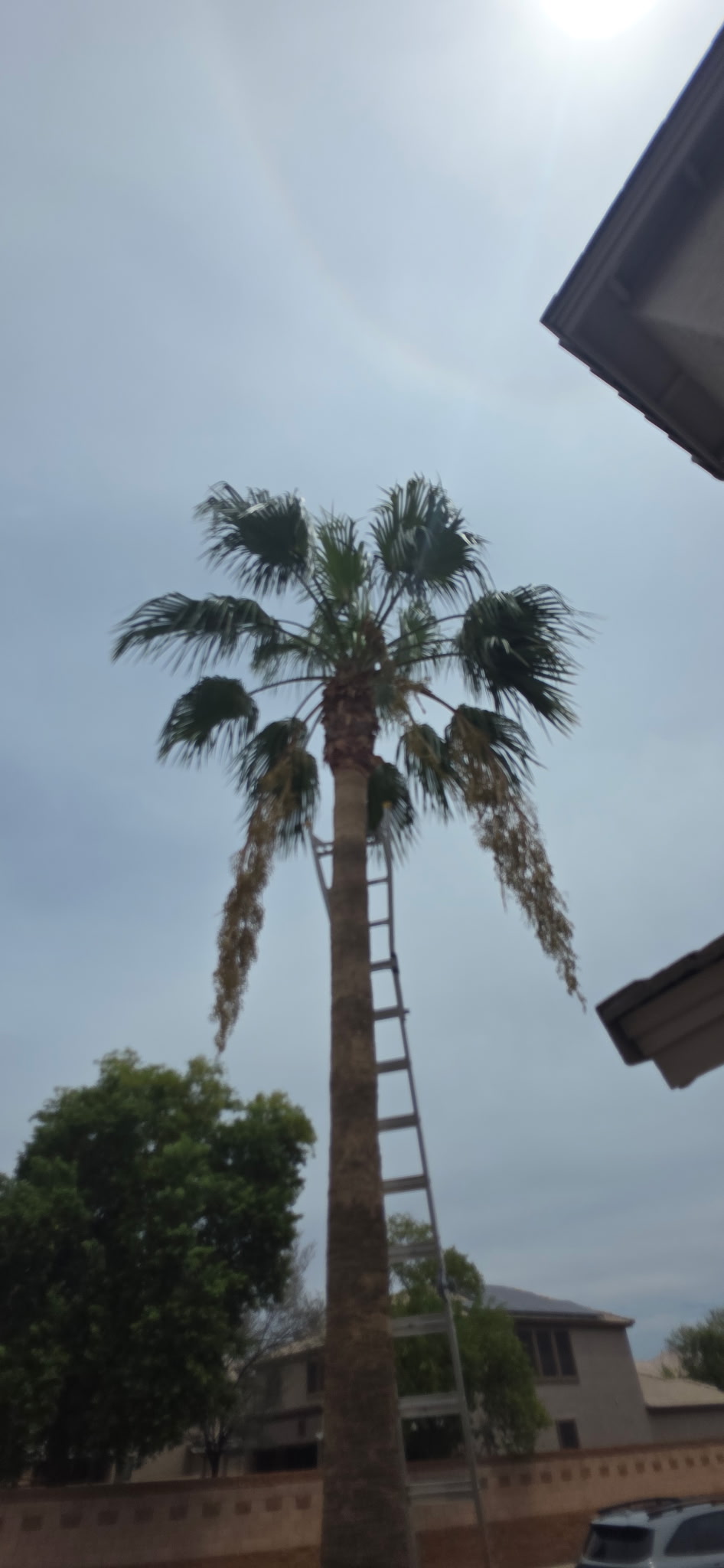
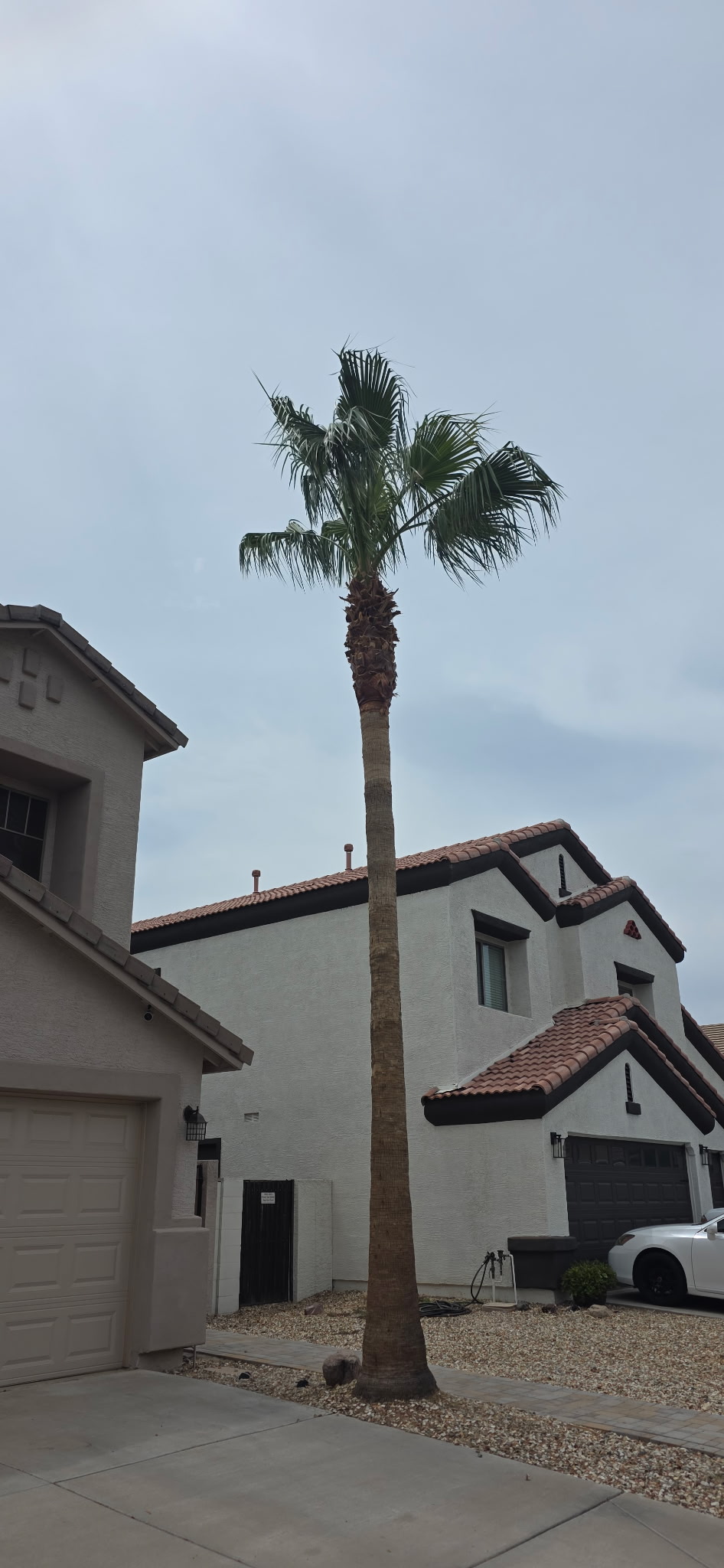
For homeowners, palm trimming helps protect the areas used every day. Clean palms drop less dry material near driveways, patios, pools, turf, walkways, irrigation lines, and roof edges. It also helps keep the yard looking intentional instead of overgrown.
When palm debris drops into rock beds or lawn areas, it often leads to extra cleanup, clogged corners, and a rougher-looking landscape. Routine trimming before high winds helps keep the rest of the yard easier to maintain.
Why office managers and property managers should schedule early
Office and commercial properties have more exposure because customers, employees, tenants, vendors, and visitors may walk near trees every day. A palm dropping fronds near an entrance, sidewalk, parking area, or courtyard creates avoidable cleanup and a poor first impression.
Scheduling palm trimming before August wind events helps managers show proactive maintenance. It can also reduce after-storm service calls, protect curb appeal, and keep outdoor areas cleaner for people using the property.
When to call Smiley's Landscaping LLC
Call Smiley's Landscaping LLC at (602) 559-2414 if your palms have dead skirts, hanging fronds, heavy seed pods, fronds touching the building, debris near walkways, or trees that have not been trimmed before monsoon season. Ivan Figueroa provides practical palm trimming, tree service, tree service Phoenix, tree service Glendale, and related landscape cleanup across the Phoenix Metro area.
Related Local Service Pages
More Landscaping Guides
Frequently Asked Questions
- Should palms be trimmed before monsoon season?
- Yes. Trimming before or during August can reduce dead fronds, seed pods, and loose material that may fall during high winds.
- Can trimming palms help protect homes and offices?
- It can reduce wind-blown debris near roofs, patios, parking areas, sidewalks, entrances, pools, and landscaped areas.
- Should every green palm frond be removed?
- No. A healthy trim should focus on dead, broken, weak, and low-hanging material while leaving enough healthy green growth to support the palm.
- Do you help with palm debris cleanup?
- Yes. Smiley's Landscaping LLC can trim palms and clean up the debris so the property is left safer, cleaner, and ready for the next storm.