By Smiley's Landscaping LLC ·
Irrigation Repair Cost in Glendale and Phoenix: Should You Repair or Replace?
A wet patch in the gravel. A sprinkler watering the driveway. A shrub that looks thirsty even though the timer runs every morning. The first question is usually the same: is this a small fix, or am I about to pay for a new irrigation system?
The short answer: irrigation repair cost in Glendale and Phoenix depends on the fault, how difficult it is to reach, and how much of the system is affected. One damaged head does not justify replacing an otherwise working system. Repeated leaks across deteriorating tubing may justify replacing that section. A useful estimate explains which situation you have before asking you to approve the work.
This guide explains how to compare those options without guessing at a price. Smiley's Landscaping LLC does not publish a fixed repair price here because a visible symptom alone cannot establish the work needed. For help with a specific problem, see our sprinkler and drip irrigation repair services or call (602) 559-2414.
What affects the cost of irrigation repair?
Compare the complete job, not just the price of a replacement part. Locating a buried leak, exposing it without damaging surrounding features, and testing the repair can take more work than fitting the part itself.
- Diagnosis: a dry zone can involve the controller, wiring, valve, water supply, or distribution lines. Ask what testing the estimate includes.
- Access: a visible broken head beside a lawn is different from a leak beneath a path, established roots, or decorative rock.
- Extent: one failed fitting calls for a different scope than repeated failures along several runs of tubing.
- Compatible components: emitters, heads, filters, and pressure regulation should suit the existing system and plants, not simply be whatever fits the connection.
- Restoration: confirm whether moving and replacing rock, backfilling soil, and cleanup are included. Ask separately about any hardscape work.
- Testing: the written scope should explain how the repaired zone will be checked and whether other zones are included.
Before booking, ask whether there is a diagnostic or service-call fee, whether it applies toward an approved repair, and how additional work is authorized. Do not assume that a free quote means every diagnostic task is free.
Should you repair the problem or replace part of the system?
Replacement is not an all-or-nothing decision. It may make sense to keep a working controller and valves while replacing a troublesome drip run. Ask for the smallest reliable repair and, when appropriate, a separate longer-term option.
| What you notice | What to investigate | How to compare options |
|---|---|---|
| One broken sprinkler head | Damage, nozzle compatibility, height, and nearby coverage | A targeted repair may be enough if the rest of the zone works properly. |
| Repeated leaks in the same drip run | Tubing condition, fittings, pressure, and previous patches | Compare another patch with replacing the affected run, not automatically the whole system. |
| One zone will not turn on | Programming, valve operation, wiring, and supply | Ask for the diagnosed cause before approving a controller or valve replacement. |
| New plants and old watering layout | Plant needs, emitter placement, and zone grouping | A layout adjustment may matter more than replacing functioning parts. |
| Water continues after the cycle ends | Whether it stops after drainage or continues because of a fault | Persistent flow needs diagnosis; changing the schedule alone may not stop it. |
Ask the person assessing the system to show you the problem. A photo of damaged tubing, a demonstrated leaking connection, or a zone test is more useful than a vague statement that everything is old. Age is one consideration; actual condition and repair history matter too.
What should you check before requesting help?
Write down when the symptom occurs: during one zone, after every watering cycle, or even when the controller is off. Photograph the wet area and the controller display. Note any recent landscaping work, changed settings, or unusual water use.
If there is no active flooding or electrical hazard, observe a normal cycle from a safe position. Look for water hitting pavement, a head that does not rise, uneven spray, or an emitter that is disconnected. Do not increase the runtime just because one plant is dry; that can add water everywhere else without correcting its supply.
For an active leak, stop the affected watering program. If water continues, use a clearly identified irrigation isolation valve only if you know how to operate it safely. Turning the controller off does not necessarily stop a mechanically stuck valve or a supply-line leak. If you cannot identify the shutoff, request help. Do not open electrical equipment, dig around unknown utilities, or dismantle a pressurized assembly.
Our guide to common Phoenix sprinkler and drip problems explains symptoms in more detail. The City of Phoenix outdoor-leak guide is another useful inspection resource.
What should a written irrigation estimate include?
A lower total is not necessarily a better deal if one proposal includes testing and cleanup and the other only includes a part. Ask each provider to describe the same scope so you can compare it fairly.
- The diagnosed problem: identify the affected zone, component, and location.
- The proposed work: distinguish a temporary patch, permanent repair, section replacement, and broader redesign.
- Parts and labor: specify quantities or the scope they cover, along with any diagnostic charge.
- Access and cleanup: state what will happen to disturbed soil, rock, lawn, or paving.
- Testing and handover: explain which zones will be run and whether controller settings will be reviewed.
- Exclusions and changes: explain what is not covered and require approval before expanding the job.
- Any warranty: request its written terms, duration, and exclusions rather than assuming coverage.
If a repair and a replacement are both offered, ask: “What problem will the larger option solve that the smaller one will not?” That question helps separate a necessary improvement from work that can reasonably wait.
What matters most for irrigation in Glendale and Phoenix?
This is a low-desert maintenance discussion, not a cold-climate winterization guide. Freezing weather is occasional rather than the central year-round concern. We would not assume an exact number of freezing nights at every property: exposure and neighborhood conditions vary. Follow local forecasts when a cold spell is expected.
For everyday watering decisions, focus on working equipment, the season, soil moisture, and the plants sharing each zone. A lawn, an established tree, and newly installed shrubs may need different treatment. A timer that suited summer conditions should not simply run unchanged through cooler months.
After rain, check actual soil conditions before resuming the usual schedule. Do not judge the entire root zone by a wet surface, and do not use a universal “minutes per day” setting for every property. The Arizona Municipal Water Users Association watering resources offer local guidance for adjusting irrigation to landscape needs.
For local service information, visit irrigation repair in Glendale or irrigation repair in Phoenix. For ongoing yard care alongside irrigation checks, see our landscaping and lawn maintenance services.
Why lawn appearance alone cannot diagnose irrigation
A tidier lawn does not prove that an irrigation repair was performed. Mowing, edging, cleanup, shade, and watering can all affect what you see. These supplied lawn-maintenance photos show the same property before and after maintenance; they are not presented as an irrigation repair case study.
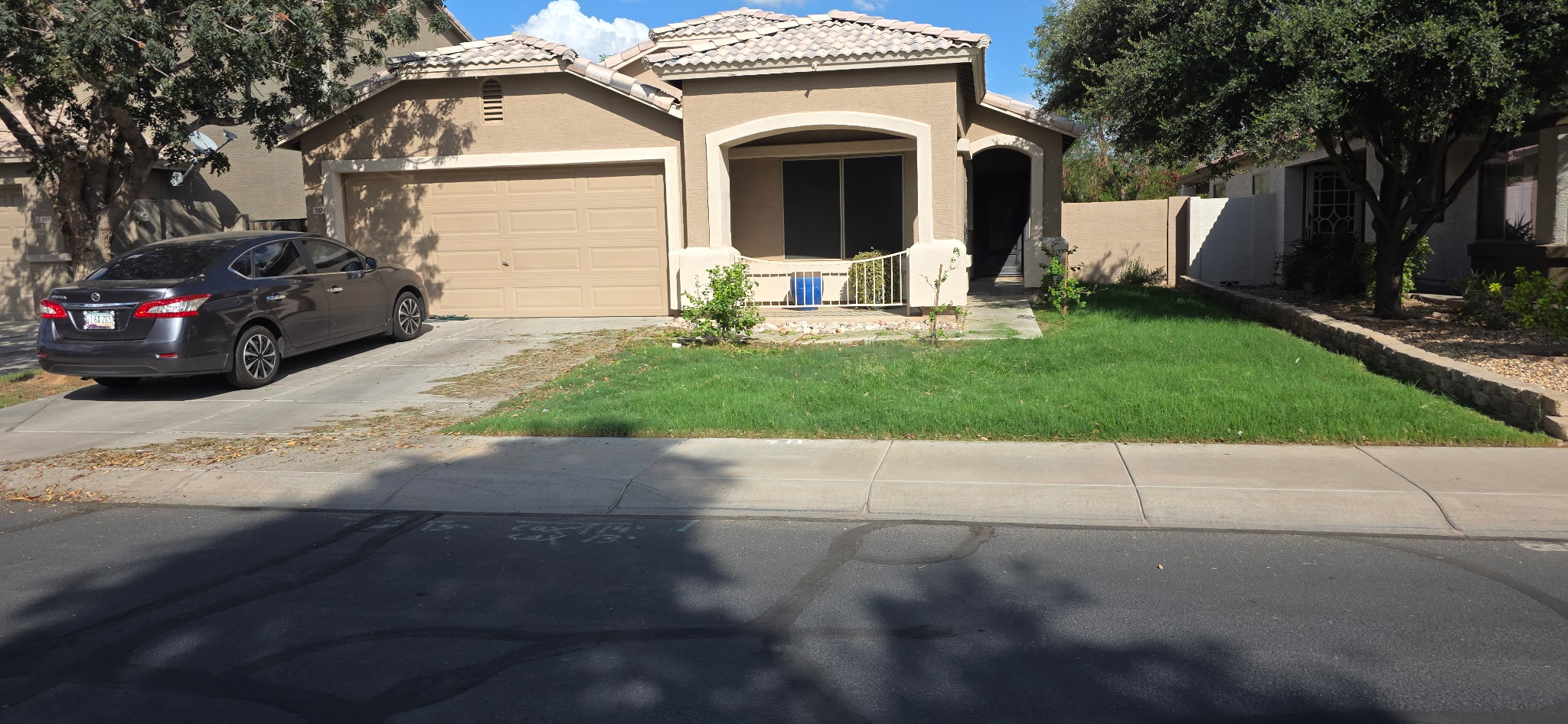
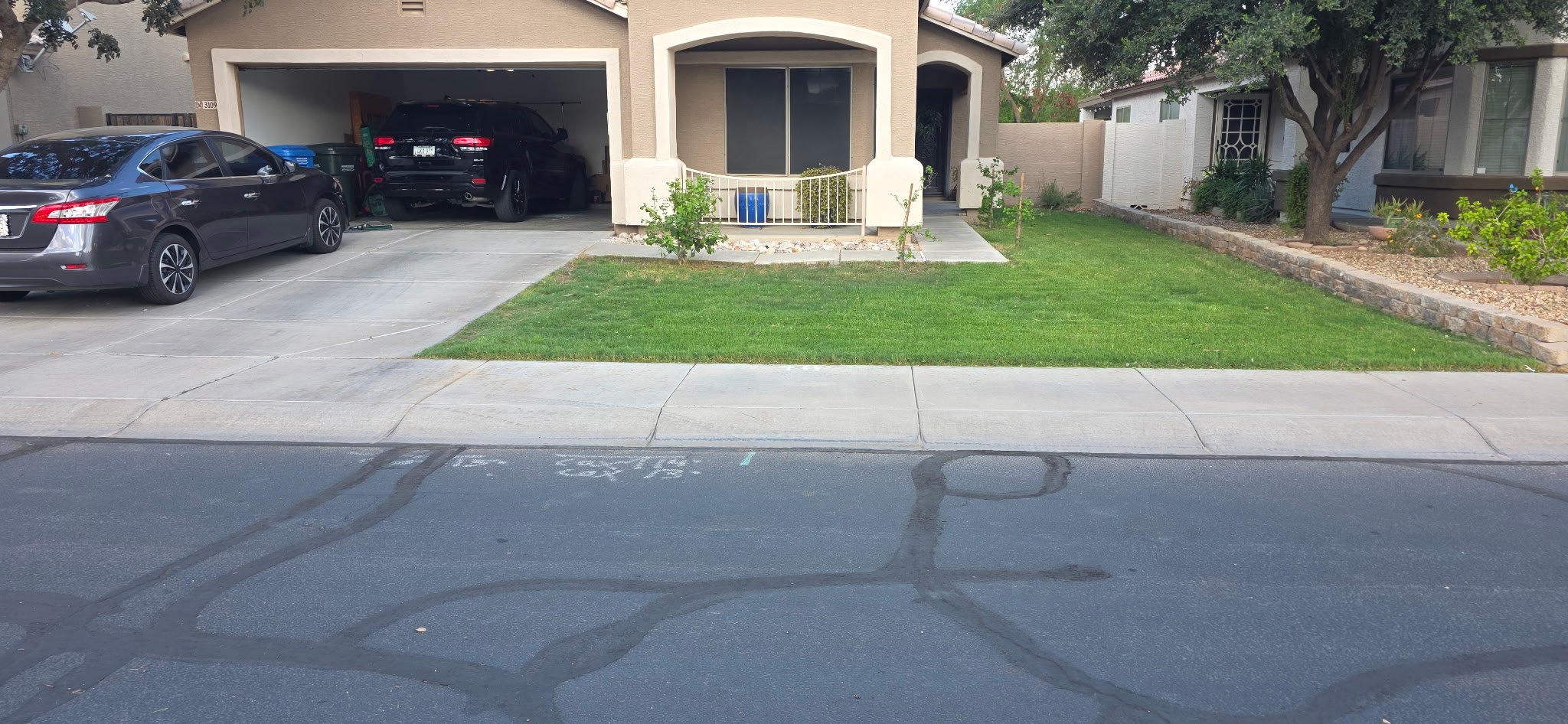
If a patch stays dry while nearby ground is soggy, ask for a coverage and delivery check before simply watering longer. If watering appears even, other lawn-health issues may need attention. The goal is to identify the cause rather than buy a repair based on a photograph.
A practical checklist for office and property managers
On a managed property, a repair needs to fit around people as well as plants. Before requesting an estimate, identify who can authorize the work and who can provide access to the controller, valve boxes, and locked gates.
- Send a marked photo or simple location description for each problem, especially when several buildings share an address.
- Identify pedestrian routes, entrances, parking areas, and any irrigation runoff affecting them.
- Agree on a work window and explain any restrictions on noise, parking, or water interruptions.
- Ask for urgent fault correction and optional upgrades to be priced separately.
- Request a record of repairs and any changed controller settings for the next person managing the property.
- Confirm who will check the repaired area after the next scheduled watering cycle.
For related property care, explore our commercial landscaping services in Phoenix and Glendale HOA landscaping page. Describe your property's requirements when contacting us rather than assuming a particular response time or service agreement.
Common questions before booking a repair
Can I get an accurate irrigation repair price from a photo?
A photo can help explain the symptom and access, but it may not reveal the cause or buried damage. Ask whether a preliminary estimate needs an on-site diagnosis before a final scope is approved.
Does a higher water bill mean the irrigation system is leaking?
Not necessarily. A changed schedule or other water use can also affect the bill. Compare recent settings and usage, look for visible irrigation problems, and investigate unexplained use rather than assuming one cause.
Should every drip line be replaced when one leaks?
No. An isolated damaged connection may need only a targeted repair. Widespread deterioration or recurring failures can justify replacing an affected section after its condition and pressure have been checked.
Should I turn off all watering while waiting for a repair?
Stop the affected zone if it is leaking. Whether other zones can keep running depends on where the fault is and how the system is supplied. Ask how to maintain essential plant watering safely while the problem is being resolved.
Do Glendale irrigation systems need attention in winter?
Yes. Cooler-season watering needs and equipment checks still matter even when freezing weather is uncommon. Adjust to plant and soil conditions, and follow local forecasts for occasional cold spells rather than using a one-size-fits-all winter schedule.
Get a clear next step for your property
You do not need to know which part has failed before asking for help. Tell us your city, what you noticed, whether water is still running, and how to access the equipment. Have photos and any recent repair history ready.
Call Smiley's Landscaping LLC at (602) 559-2414 or request an irrigation repair quote. Ask for an explanation of the fault, a defined scope, and approval before additional work. A good decision starts with understanding what you are paying to fix.